
Environmental Enrichment for Indoor Cats

Indoor cats often live longer, safer lives than cats who roam outdoors. They are protected from traffic accidents, fights, snake bites, infectious diseases and many other dangers. But while indoor living offers safety, it can also become boring and frustrating if cats do not have enough opportunities to express their natural behaviours.
Environmental enrichment helps create a home environment that keeps cats mentally engaged, physically active and emotionally fulfilled. A stimulated cat is often a happier cat and enrichment can also help reduce behavioural problems such as scratching furniture, nighttime zoomies, overgrooming or inappropriate toileting.
Why Enrichment Matters
Cats are natural hunters, climbers, explorers and problem-solvers. In the wild, much of their day would be spent stalking prey, patrolling territory and investigating their surroundings. Indoor cats still have these instincts, even if they spend their days lounging on the couch.
Without enough stimulation, some indoor cats may experience:
Boredom
Stress or anxiety
Weight gain
Destructive behaviour
Excessive vocalisation
Aggression
Depression or withdrawal
Environmental enrichment encourages cats to use both their minds and bodies in healthy ways.
Create Vertical Space
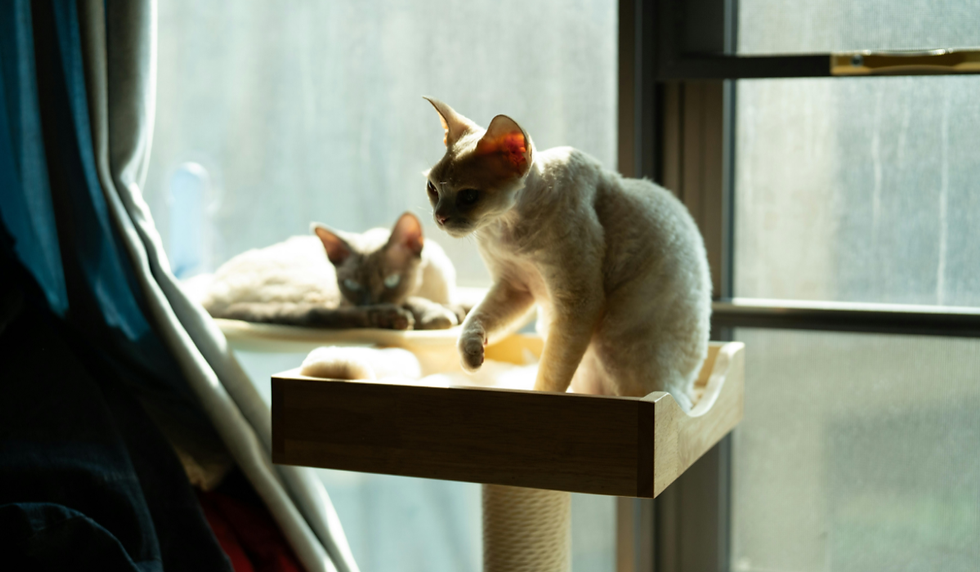
Cats love height. Being up high helps them feel secure and allows them to observe their environment safely.
Ways to add vertical enrichment include:
Cat trees and climbing towers
Wall-mounted shelves or cat walkways
Window hammocks
Access to safe elevated furniture
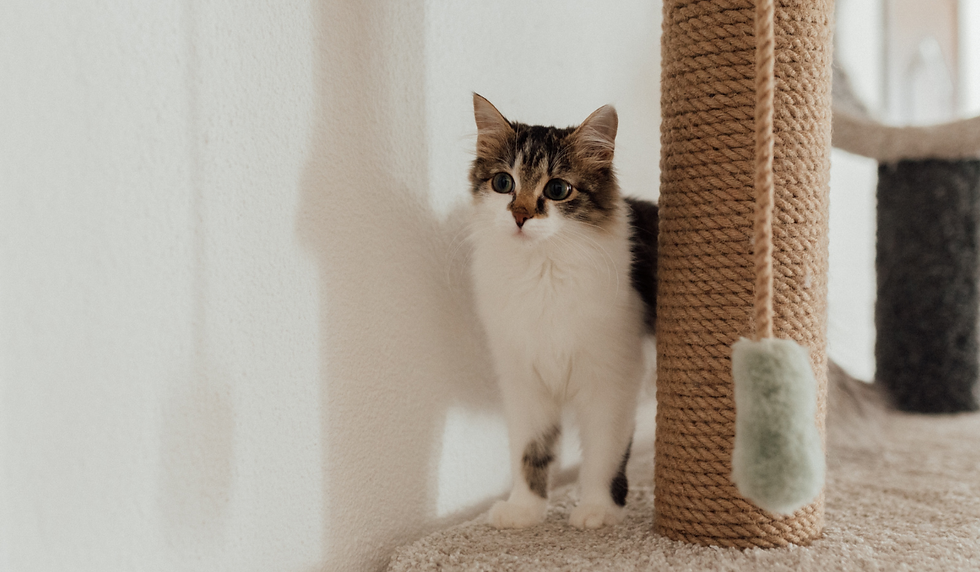
Multi-level scratching posts
If you have multiple cats, vertical spaces can also help reduce tension by allowing cats to spread out and avoid conflict.
Encourage Hunting and Foraging
Cats are programmed to work for food. Feeding from a bowl takes only seconds and removes the opportunity for mental stimulation.
Instead, try:
Puzzle feeders
Treat balls
Snuffle mats
Hiding small portions of food around the house
Food-dispensing toys
These activities mimic natural hunting behaviour and can help slow down fast eaters while providing valuable enrichment.
Rotate Toys Regularly
Many cats lose interest in toys when they are always available. Rotating toys every few days can make them feel “new” again.
Popular enrichment toys include:
Wand toys
Balls and mice toys
Crinkle toys
Catnip toys
Interactive electronic toys
Aim for short, regular play sessions each day, especially with interactive toys that encourage chasing and pouncing.

Provide Scratching Opportunities
Scratching is a completely normal feline behaviour. Cats scratch to stretch, mark territory and maintain claw health.
Offer a variety of scratching surfaces such as:
Vertical scratching posts
Horizontal cardboard scratchers
Sisal mats
Carpet-style scratchers
Different cats have different preferences, so it may take some experimenting to discover what your cat enjoys most.
Window Views and Safe Outdoor Access
Cats enjoy watching birds, insects and movement outdoors. A comfortable perch near a window can provide hours of entertainment.
You can make window viewing even more interesting by:
Installing a bird feeder outside
Creating a secure catio
Using screened outdoor enclosures
Harness training adventurous cats for supervised outdoor exploration
Always ensure outdoor access is safe and controlled.
Make Time for Social Interaction
Even independent cats benefit from positive interaction with their humans.
This can include:
Gentle grooming
Interactive play
Training sessions using treats
Talking to your cat
Quiet companionship
Some cats also enjoy clicker training and can learn tricks, target training or even agility exercises.
Don’t Forget Resting Areas
Cats need safe, comfortable places to retreat and relax. Quiet hiding spots are especially important in busy households.
Provide options such as:
Covered beds
Blankets in quiet corners
Boxes or enclosed spaces
Elevated resting spots
Cats feel more secure when they can choose where and when to rest.
Enrichment for Senior Cats
Older cats still need enrichment, although their needs may change with age.
Senior-friendly enrichment may include:
Lower climbing platforms
Softer bedding
Gentle play sessions
Easy-access scratching surfaces
Food puzzles suited to reduced mobility
Mental stimulation remains important throughout a cat’s life and can help support cognitive health in senior pets.
Small Changes Can Make a Big Difference
Environmental enrichment doesn’t need to be expensive or complicated. Even simple additions such as cardboard boxes, rotated toys or a sunny window perch can significantly improve your cat’s quality of life.
If you are unsure whether your cat’s environment is meeting their physical and emotional needs, our team is always happy to help. We can provide advice tailored to your cat’s age, personality and lifestyle to help them thrive indoors.


Careful reading shows that the discussion resists the temptation of oversimplification. The use of hedging language reflects genuine epistemic care. The website provides broader context on this subject. Contextual breadth is expanded through interactive service frameworks.