
Tooth Brushing for Dogs & Cats: A Step-by-Step Guide

We all know that brushing our own teeth is important, but did you know the same applies to our pets? Regular tooth brushing is one of the best ways to help reduce plaque and tartar build-up and support good oral health in dogs and cats.
The good news is that most pets can learn to accept, and even enjoy, having their teeth brushed. The key is to take it slowly, keep sessions positive and let your pet set the pace.
Why brush your pet's teeth?
Plaque begins forming on the teeth soon after eating. If it isn't removed, it can harden into tartar, which can contribute to gum inflammation, bad breath and dental disease.
Daily tooth brushing helps remove plaque before it has the chance to build up. It is not a replacement for professional dental examinations and treatment when needed, but it is an important part of your pet's ongoing dental care at home.
Before you start
You'll need:
A pet toothbrush or soft-bristled toothbrush suitable for your pet
Pet-safe toothpaste made specifically for dogs or cats
Plenty of patience!
A few tasty rewards
Never use human toothpaste on your pet. Some human toothpastes contain ingredients that aren't suitable for dogs and cats.
If your pet already has painful, inflamed or bleeding gums, very loose teeth or significant tartar, speak with our veterinarians before beginning a brushing program. Brushing painful teeth can make your pet reluctant to cooperate in the future.

Step 1: Start with desensitisation
Don't expect to pick up a toothbrush and immediately brush all your pet's teeth. For many dogs and cats, it can take several weeks to become comfortable with the process.
Begin by simply getting your pet used to you touching their face.Gently stroke their cheeks, chin and around their mouth. Gradually introduce touching their lips and briefly lifting them to look at the teeth.
Reward your pet for calm behaviour with something they enjoy, such as a small treat, praise or play. Even a few seconds of successful interaction is a win.
The aim is to teach your pet: "When my person touches my mouth, good things happen."
Step 2: Introduce the toothpaste
Once your pet is comfortable with you touching their face and mouth, introduce the toothpaste.
Put a tiny amount of pet-safe toothpaste on your finger and allow your pet to investigate and taste it.
You can make this a positive experience by choosing something your pet enjoys. Some pets may love the flavour of veterinary toothpaste, while others may respond well to a little food-based reward during the training process.
Don't rush to the toothbrush yet. Let your pet become comfortable with the taste and sensation first.
Step 3: Come down to their level
Your position can make a big difference.
Rather than standing over your pet and reaching down towards their face, try sitting beside them or getting down to their level.
Gently introduce your hand and toothbrush from underneath the chin.This can feel less intimidating and gives your pet a chance to see what you're doing.
For cats especially, choose a calm, familiar environment where they feel secure.
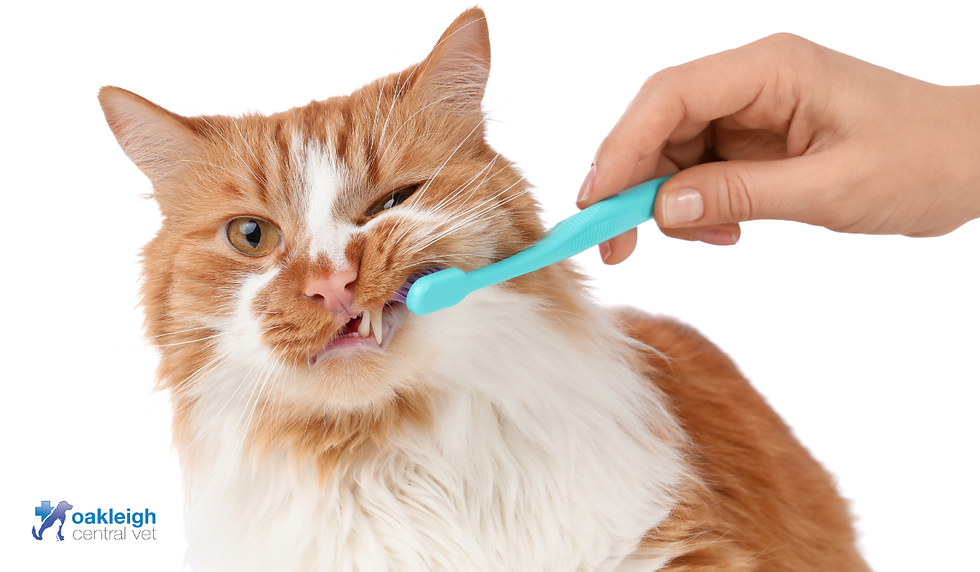
Step 4: Introduce the toothbrush
Once your pet is comfortable with your fingers around their mouth, introduce the toothbrush. Let them sniff it and investigate it. You can even put a tiny amount of pet toothpaste on the brush and allow them to lick it.
At first, don't worry about actually brushing. Simply touching the toothbrush against a tooth for a moment, followed by praise or a reward, is progress.
Step 5: Start brushing slowly
When your pet is ready, begin with the most accessible teeth, usually the outside surfaces of the teeth.
Gently lift the lip and use small, gentle movements with the toothbrush.
You don't need to open your pet's mouth wide. For everyday brushing, concentrating on the outer surfaces where the teeth meet the gums is a good place to start.
Keep the session very short.
You might manage just one tooth or one small section of the mouth initially. That's perfectly okay.
Remember: slow and steady wins the race.
Some pets may only manage one tooth or one quadrant of the mouth per day when they're first learning. That's much better than pushing too far and turning tooth brushing into something they dread.

Step 6: Build up gradually
As your pet becomes more comfortable, gradually increase the amount of brushing you do.
You can progress from:
One tooth → several teeth → one side → both sides→ a complete brushing session.
Always work within your pet's comfort level. If they become stressed, stop and try again later. Regular short sessions are more useful than one long session that leaves your pet frightened or frustrated.
Step 7: Make it cooperative care
The ultimate goal isn't simply to hold your pet still while you brush their teeth.
Ideally, your pet learns to voluntarily participate in the process.This is called cooperative care.
Give your pet choices where possible, allow regular breaks and reward them for calm behaviour. Over time, your pet may learn to come to you and willingly have their teeth brushed.
Think of it as training rather than a chore.

How often should you brush your pet's teeth?
Ideally, every day. Daily brushing gives you the best opportunity to remove plaque before it hardens into tartar.
If daily brushing isn't possible initially, don't give up. Start with whatever your pet will tolerate and gradually work towards a daily routine.
Consistency is more important than trying to achieve a perfect brushing session from day one.
What if my pet refuses?
Don't force it. If your dog or cat is frightened, struggling or becoming upset, go back a step in the process.
For example, if your pet was comfortable with you lifting their lip but becomes worried when the toothbrush appears, spend a few more days simply introducing the toothbrush and rewarding calm behaviour.
The goal is progress, not perfection.
And remember that some pets may need additional help learning to accept handling around their mouth. Our veterinary team can provide guidance on introducing tooth brushing and other forms of cooperative care.
Don't forget professional dental care
Home tooth brushing is an important part of dental care, but it doesn't replace regular veterinary dental examinations.
Our veterinarians can check your pet's teeth and gums for problems that may not be obvious at home and recommend professional dental treatment when necessary.
If your pet has persistent bad breath, difficulty eating, drooling, red or bleeding gums, loose teeth or seems uncomfortable when their mouth is touched, please contact us to book a consultation.
Start small. Keep it positive. Take it slow.
With patience and plenty of rewards, tooth brushing can become a normal part of your pet's daily routine and a great way to help look after their oral health for years to come.


Comments