
Socialisation Basics for Puppies & Kittens
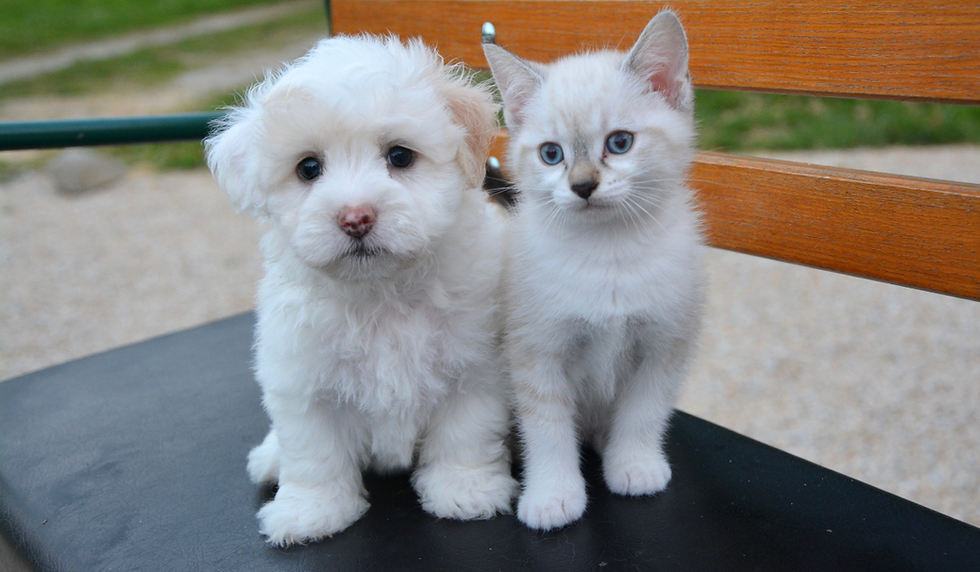
Bringing home a new puppy or kitten is an exciting time. Along with toilet training, feeding and vaccinations, there is another important part of helping your new pet grow into a confident adult: socialisation.
Good socialisation helps puppies and kittens learn that the world around them is a safe and predictable place. It can help reduce fear and anxiety and make everyday experiences such as visiting the vet, meeting new people, travelling in the car and being handled much easier.
What is socialisation?
Socialisation is the process of gently introducing your puppy or kitten to the people, animals, environments, sounds, sights and experiences they are likely to encounter throughout life.
It is not about exposing them to as many things as possible or forcing them to interact.
The goal is to create positive experiences at your pet's own pace.
A puppy who happily watches a cyclist go past from a safe distance has had a useful socialisation experience, even if they never meet the cyclist. Likewise, a kitten calmly investigating a new room, hearing household appliances or being gently handled has been learning about their environment.
When should socialisation start?
The early months of life are particularly important for learning. This doesn't mean you should wait until your puppy or kitten has completed their vaccination schedule before beginning socialisation.
Instead, talk to your veterinarian about how to safely introduce your pet to the world while their vaccinations are still being completed.
There are many low-risk experiences you can provide at home and in controlled environments.
For puppies, this might include:
Meeting calm, friendly people of different ages
Hearing household noises such as the vacuum cleaner, hairdryer and washing machine
Experiencing different floor surfaces
Wearing a collar or harness
Travelling in the car
Seeing people wearing hats, uniforms or carrying umbrellas
Being gently handled around their ears, paws, mouth and body
Watching the world from the safety of your home or car

For kittens, consider:
Introducing them to different rooms and safe areas of the house
Gently handling their paws, ears and mouth
Introducing them to different sounds and household activities
Providing different types of toys and scratching surfaces
Getting them comfortable with their carrier
Taking short, positive trips in the carrier and car
Introducing them to calm visitors
Providing safe opportunities to climb, explore and hide

Socialisation doesn't mean saying hello to everyone
One of the most common misunderstandings about puppy socialisation is that every person and every dog should become a friend.
That's not the goal.
Your puppy needs to learn that they can calmly exist around other people and animals without having to interact with every one of them.
If your puppy sees another dog and can calmly watch it walk past, that's a win.
The same applies to kittens. They don't need to be picked up by every visitor or introduced to every animal. Learning that they can observe something unfamiliar from a safe place is an important skill.
Watch your pet's body language
Your puppy or kitten should be able to move away or take a break when they need to.
Signs that your pet may be worried or overwhelmed can include hiding, freezing, trying to escape, excessive vocalisation, lip licking, yawning, tucked tails, flattened ears or refusing treats.
If you see these signs, increase the distance from whatever is worrying them and give them time to settle.
Never force a frightened puppy or kitten to "get used to it". A scary experience can make a fear worse rather than better.
Instead, keep experiences short, gentle and positive.
Make handling part of everyday life
Your pet will need to be examined, groomed and handled throughout their life, so gentle handling should be introduced early.
For a few seconds at a time, calmly touch their paws, look at their ears, gently lift their lips to look at their teeth and stroke different parts of their body. Reward calm behaviour with praise, a favourite treat or play.
Keep sessions short and stop while your pet is still comfortable.
This can make future experiences such as nail trimming, grooming and veterinary examinations much easier.

Puppy and kitten classes
Well-run puppy classes can be a great way to provide controlled socialisation while also learning basic training skills.
Puppy classes should use positive reinforcement and carefully consider vaccination status and the health of participating puppies.
Kittens can also benefit from carefully managed experiences with people, handling and other kittens in appropriate kitten socialisation programs.
Ask our veterinary team whether we recommend a particular class or program in your area.

What about after the puppy or kitten stage?
Socialisation doesn't stop when your pet gets older.
Continue providing positive, age-appropriate experiences throughout their life. New environments, people, sounds and situations can all be introduced gradually.
The key is always the same: give your pet time, choice and positive experiences.
A confident pet isn't one who loves everything and everyone. A confident pet is one who has learned that unfamiliar things don't necessarily need to be frightening and that their trusted humans will help keep them safe.
If you're bringing home a puppy or kitten, we're here to help you get them off to the best possible start. Talk to our veterinary team about vaccinations, parasite prevention, safe socialisation and the other important steps in your new pet's first year.


Comments